
Restore the Flow from Receiving Pit to Load-Out
Breakdowns Across the Grain Movement System
Morgan Millwright supports mechanical repairs involving:
- Receiving and unload equipment
- Bucket elevators and grain legs
- Belt, drag and screw conveying equipment
- Augers, spouts and transfer connections
- Shafts, bearings, pulleys, couplings and drives
- Dryer and bin-related material handling components
- Supports, transitions and system modifications
Symptoms may include a sudden stop, lost capacity, plugging, spillage, belt tracking issues, heat, noise or vibration. Even when the system continues to run, these changes can signal damage that is progressing. An early service call may turn a major shutdown into a more controlled repair.
Follow Material Flow to the Root Cause
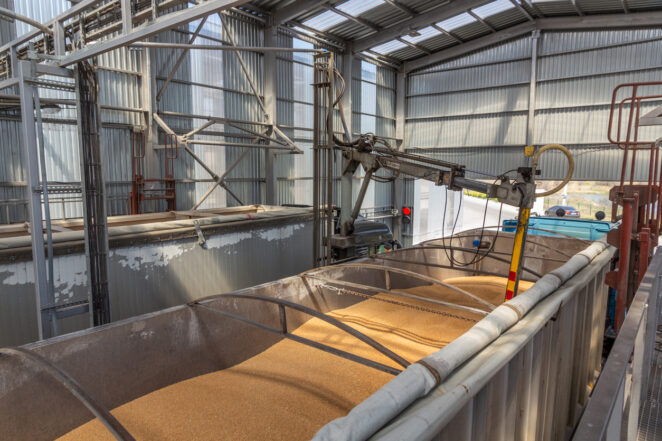
Grain systems experience changing moisture, volume and operating hours. A transfer point that performs adequately under light load may restrict flow during peak receiving. Worn components may remain unnoticed until long harvest days expose the weakness. Misalignment or structural movement can create failures that appear to be ordinary part wear.
During troubleshooting, we consider capacity, routing, alignment, supports, wear zones and service access. A repair may involve replacing components, correcting alignment, clearing a mechanical restriction, reinforcing a support or modifying a transition. The goal is to restore the affected section without overlooking the conditions that caused it to fail.
Request Grain Handling Breakdown Repair
When grain stops moving, contact Morgan Millwright with the site location, affected equipment and current symptoms. Photos and equipment information are helpful when available. Call (563) 655-4160 for Iowa service or (309) 264-3405 for Illinois service.
Frequently Asked Questions
What is the difference between grain handling repair and grain elevator repair?
Grain elevator repair focuses on bucket elevators or legs. Grain handling breakdown repair covers the broader receiving, conveying, transfer, storage and load-out system, including augers, conveyors, spouts and related drives.
Can you troubleshoot a system that runs but has lost capacity?
Yes. Reduced throughput may be caused by component wear, belt slippage, restricted transfer points, drive problems or a mismatch between connected equipment. On-site evaluation can help isolate the limiting condition.
Does Morgan Millwright provide follow-up improvements after an emergency repair?
Yes. The company also provides system conditioning, mechanical fabrication, equipment installation, alignment, planning and grain handling system design when a lasting correction requires a larger scope.